
Quest rooms, mini parks, one-off attractions — businesses where the sale and the use can happen at different times, with different people. A guest buys a ticket in the morning from one clerk and uses it in the evening, showing it to someone else entirely. RentOS has a separate mode for that — "Tickets": not a real-time launch, but an order that can be redeemed whenever.
An Order Instead of a Single Event
A cashier assembles an order from whatever the guest asks for — say, "two for the carousel, one for the quest" — and rings it up all at once. The guest gets a short order number. Each item inside the order is a separate ticket, and it's redeemed separately too: if an order had three carousel tickets and not everyone showed up at once, each one is redeemed as it gets used.
Prices — on the Asset Itself, Not a Blanket Zone Rate
Every attraction has its own set of price options: say, "Adult — 150," "Child — 100," "Discount — 0." The cashier just picks the right option when selling, instead of entering a price by hand. If prices change later, tickets already sold keep the price that was in effect at the moment of sale.
Redemption Can Be Turned On — or Left Off
If redemption is on, every ticket has a status — active, redeemed, expired, or voided — and it's visible who redeemed it and when. You can even set an expiration: a ticket that goes unused for N days will stop being active on its own.
If redemption is off — the "old-fashioned" way — the system just remembers what was sold, with no statuses or buttons. That's still useful: if a guest argues "I paid, and they're not letting me in," the order number always lets you pull up its contents and total. This mode can be toggled at any time — it has no effect on the money.
Revenue Is Counted at the Sale, Not at the Use
In results submission, a zone's calculated revenue is the sum of orders sold since the last submission, regardless of when the tickets will be (or already were) redeemed. This is deliberate: a ticket can be gifted or set aside for later — the moment of payment and the moment of the actual visit don't have to coincide, and revenue shouldn't "jump around" depending on when the guest finally used the ticket.
A Ticket Can Be Printed
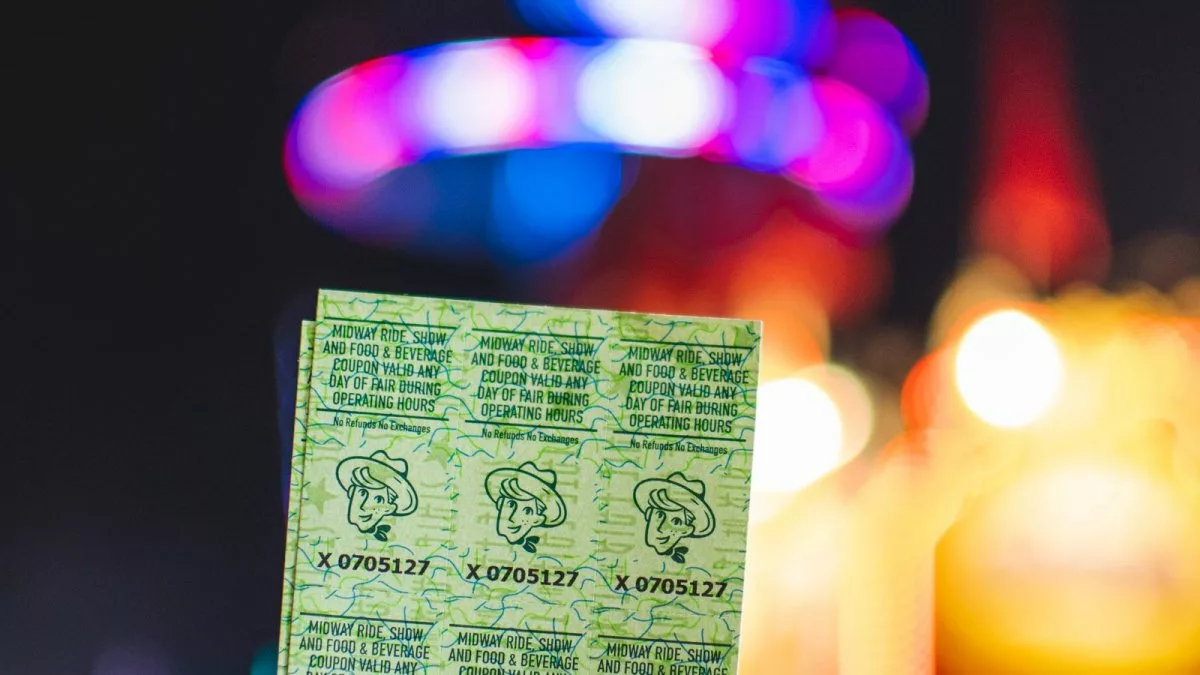
Every item in an order gets its own small printed ticket — order number, attraction name, price option, sale date, and expiration if one is set. Tickets can also be reprinted separately later, if a guest loses the first one.
Who It's For
The main difference between Tickets and Stays or Launches is that there the sale and the use are one event in real time, while here they are separated.
The rule for choosing is simple, and it's about people, not about rides: the cashier takes the money and someone else starts the ride — Tickets. The same person took the payment and started it right away — Launches, and tickets would only add work. What this looks like in practice is covered in the article on revenue control in a small amusement park.
So the mode fits anywhere the guest may buy a ticket in advance, receive it as a gift or use it later on: escape rooms, parks with several rides, workshops.
 Русский
  English
  Українська
  Italiano
  Română